

Fatty liver is referred to as a “quiet” disease due to many individuals experiencing no noticeable signs in its early stages. Additionally, insulin resistance will typically develop slowly over time prior to blood glucose values appearing concerning. The presence of both should prompt concern for metabolic health.
The connection matters because both are tied to how the body stores, uses, and moves energy. Understanding this relationship can help you recognize patterns sooner and support long-term health.
What Is Insulin Resistance?
Insulin is a hormone that aids in moving sugar from the bloodstream to the cells. It allows the cells to utilize the sugar for energy. Insulin resistance happens when the cells are unable to respond to insulin as efficiently as needed. As a result, the body may produce high insulin levels to keep blood sugar in a normal range.
For a while, this extra insulin can hide the problem. Blood sugar may look “fine,” but high insulin levels may already be placing stress on the body. Common insulin resistance symptoms can include fatigue after meals, cravings, increased hunger, weight gain around the middle, difficulty losing weight, and energy crashes.
What Is Fatty Liver?
Fatty Liver is an accumulation of excess fat in the Liver. A new name to describe these conditions can now be referred to as Metabolic Dysfunction-Associated Steatohepatitic Disease (MASLD). Many people refer to it as Non-Alcoholic Fatty Liver Disease (NAFLD).
The liver’s main job is to help your body break down all food groups into useful nutrients, assist with fat management, aid in maintaining healthy blood glucose levels and act as a filter by eliminating unwanted toxins from your body. If you develop fatty liver then there could be evidence that the body was unable to metabolize its nutrients.
Can Insulin Resistance Cause Fatty Liver?
It may be a strong contributor to the accumulation of fat in the Liver. The Body requires more insulin as the liver’s sensitivity to insulin decreases. This increase in insulin over time promotes fat storage. As a result, there will be a greater likelihood of having fat accumulate in your liver.
This relationship can also go both ways. Fatty liver may worsen metabolic function and make insulin resistance harder to manage. That is why these issues are often discussed together instead of as completely separate problems.
Is Fatty Liver a Sign of Insulin Resistance?
It can be. It does not automatically mean someone has insulin resistance, but it often appears alongside metabolic concerns such as high insulin levels, weight gain, high triglycerides, prediabetes, type 2 diabetes, or increased waist circumference.
For many people, fatty liver is one of the first visible signs that metabolic health is under strain. It may show up on lab work or imaging before a person feels sick. This is why it should not be ignored, even when symptoms are mild or absent.
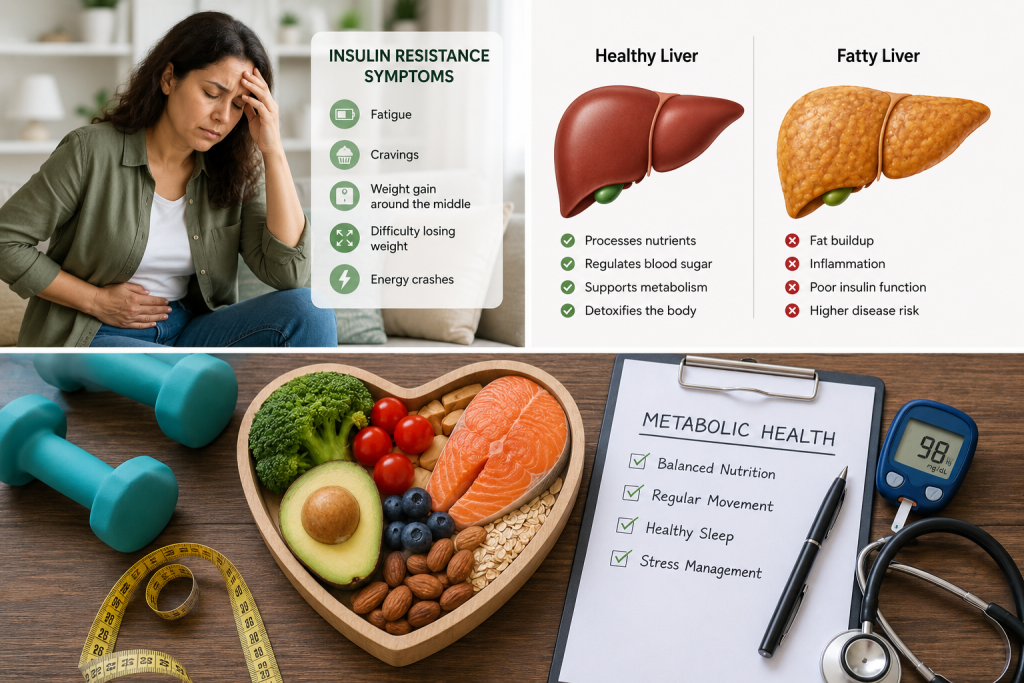
Fatty Liver Symptoms Can Be Easy to Miss
There is one major reason many cases of fatty liver disease go unreported. Fatty liver disease symptoms are not always obvious. Many people may experience some of the following:
- Fatigue
- Vague upper right abdominal discomfort
- Low energy (or sluggishness)
- Lack of motivation
These symptoms can also cause people to miss work due to stress, lack of rest, age, or a busy lifestyle. Therefore, doctors will identify signs of fatty liver by running blood tests, doing ultrasounds or a medical exam for something else.
Because fatty liver symptoms can be subtle, it is important to look at the bigger metabolic picture. Insulin resistance symptoms, high insulin levels, changes in cholesterol, blood sugar patterns, and waist measurement may all offer useful clues.
Why This Matters for Metabolic Health
Metabolic health is not just about weight. It includes how your body manages blood sugar, insulin, inflammation, liver fat, energy, appetite, and body composition. Insulin resistance and fatty liver are both metabolic warning signs that deserve attention.
If weight loss feels slow or unpredictable, these conditions may be part of the reason. When the body is struggling with metabolic balance, cravings may feel stronger, energy may feel inconsistent, and progress may feel harder than expected.

How to Support Better Liver and Metabolic Function
Lifestyle habits can make a meaningful difference. Balanced meals with protein, fiber-rich vegetables, healthy fats, and minimally processed carbohydrates can support steadier blood sugar. Regular movement, especially strength training and walking, can help improve insulin sensitivity and support metabolism.
Sleep and stress matter too. Poor sleep and chronic stress can affect hunger hormones, blood sugar regulation, and cravings. Reducing alcohol intake may also be helpful for liver health, especially when fatty liver is already a concern.
Even modest weight loss, when appropriate, may improve liver fat and metabolic markers. More importantly, sustainable habits tend to work better than extreme restriction.
When to Talk With a Healthcare Provider
If you have been told you have fatty liver, high insulin levels, prediabetes, elevated liver enzymes, or symptoms that make you suspect insulin resistance, it is worth having a deeper conversation with a healthcare provider.
Insulin resistance and fatty liver are common, but they are not something to dismiss. They can be early signs that your body needs more support. At Ideal Metabolic Health and Body, the focus is on helping people understand their metabolic health with education, compassion, and personalized care, so they can take realistic steps toward better energy, healthier body composition, and long-term wellness.