

Your food intake is good for your health, you are getting regular physical activity, and you are making better choices for your overall health. However, you are finding it difficult to get your blood sugar under control as well as you would like. The possible issue here could be what many of us tend to ignore when we talk about our health: stress.
Stress hormones and blood sugar are often overlooked. Stressors include, but are not limited to work pressures, lack of sleep, being overwhelmed with family obligations, etc., all of which cause stress and put pressure on the body.
Understanding how stress hormones and blood sugar interact can help you make sense of frustrating blood sugar fluctuations—even when you’re doing everything “right.”
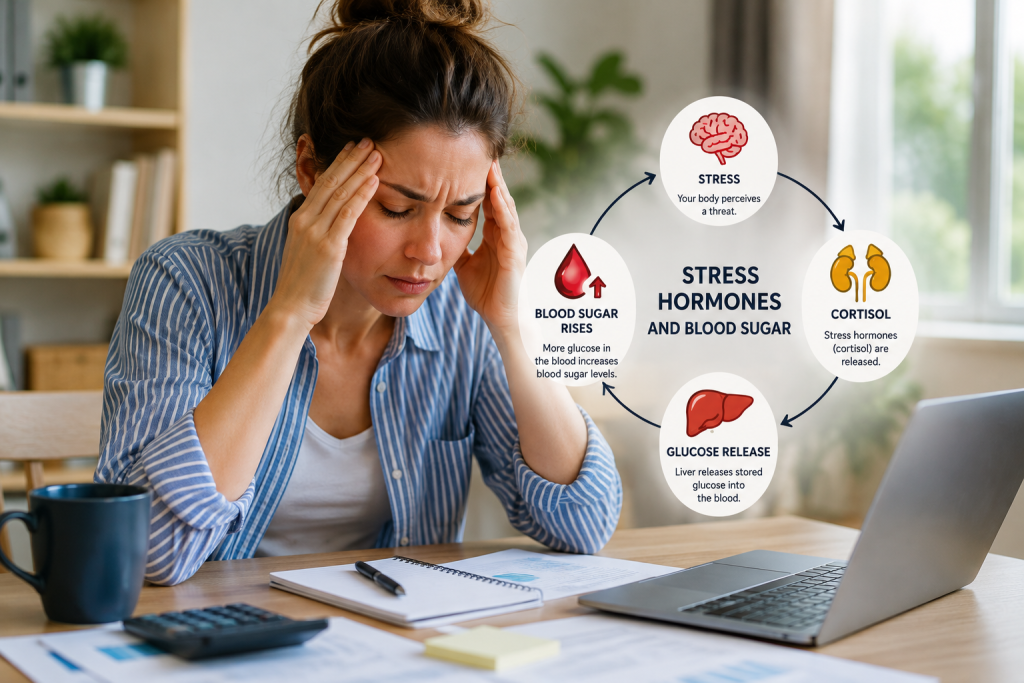
What Are Stress Hormones?
When your body experiences stress, it releases several hormones designed to help you respond quickly to a challenge. The best-known of these is cortisol, often called the “stress hormone.”
Cortisol also performs several vital functions, which include regulating energy in your body, supporting your immune system and influencing your sleep/wake cycles and also helps support a cortisol hormone levels in your body on an ongoing basis. During short periods of stress, cortisol can be helpful by preparing your body to react to the stressor.
This is where the connection between stress hormones and blood sugar becomes especially important.
Does Cortisol Increase Blood Sugar?
The short answer is yes.
Cortisol raises blood glucose levels and gets your body ready to respond to stress by telling your liver to let go of stored glucose in the form of blood sugar. The increased blood glucose supplies both your muscle cells with fuel and your brain with energy.
In short bursts, this response is completely normal.
However, when stress hormones and blood sugar remain linked through ongoing stress, your body may continue releasing glucose even when you don’t actually need the extra energy.
Over time, this can contribute to higher blood sugar, greater insulin demand, and increased difficulty maintaining good metabolic health.
In fact, according to the National Institute of Diabetes and Digestive and Kidney Diseases (NIDDK), conditions that cause the body to produce too much cortisol can contribute to insulin resistance and increase the risk of developing diabetes.
Why Blood Sugar Can Rise Even When You Eat Healthy
The idea that our food intake alone affects our glucose levels in this way seems to be one of those myths.
The truth of the matter is that stress hormones and blood sugar are linked, and it doesn’t really matter if you have eaten recently.
Think about waking up late for a meeting with several tasks on your plate, then having to commute home while thinking about your family’s needs. Even though each meal was perfectly balanced, your body might see all of this as a continuous threat.
As a result:
- Cortisol levels stay elevated.
- More glucose enters the bloodstream.
- Your body may become less responsive to insulin over time.
- Blood sugar becomes harder to regulate.
- This helps explain why someone following a healthy eating plan may still experience unexpected glucose fluctuations.
Can Low Cortisol Affect Blood Sugar?
Most discussions focus on when cortisol is high, but it’s also worth mentioning that cortisol is low in some medical conditions.
Low cortisol is far less prevalent than high cortisol and since it impairs glucose synthesis through insulin stimulation, it may also disrupt blood sugar homeostasis. For that reason, all persistent symptomology should be evaluated by a medical professional as opposed to being automatically attributed to “stress”.
However, for most people, chronically elevated levels of cortisol will represent the more typical cause of their symptoms.
Signs Your Stress May Be Affecting Blood Sugar
When stress hormones and blood sugar remain elevated for long periods, you might notice symptoms such as:
- Increased cravings for sugary foods
- Afternoon energy crashes
- Difficulty concentrating
- Trouble sleeping
- Feeling hungry soon after eating
- Weight gain around the abdomen
- Higher-than-expected glucose readings
These symptoms don’t automatically mean you have a medical condition, but they can be clues that your body is under more stress than it can comfortably manage.
Supporting Healthy Stress Hormones and Blood Sugar in Fort Collins
The good news is that you don’t have to eliminate stress completely to support your metabolism. Instead, the goal is helping your body recover more effectively between stressful moments.
Simple habits that may help support healthier stress hormones and blood sugar include:
- Prioritizing consistent, quality sleep
- Walking after meals
- Eating balanced meals that include protein, fiber, and healthy fats
- Practicing deep breathing or mindfulness
- Strength training several times each week
- Spending time outdoors, whether that’s walking a local trail or simply getting fresh air
These small changes can help support healthier cortisol levels, improve how your body manages glucose, and promote better overall metabolic health.
Small Lifestyle Changes Can Make a Big Difference
Because stress hormones and blood sugar are so closely connected, improving one often benefits the other. Managing stress doesn’t just support emotional well-being—it can also help your body regulate blood sugar more effectively and reduce unnecessary glucose spikes.
Remember that your health is influenced by much more than what appears on your plate. Sleep, movement, recovery, and emotional wellness all play important roles in maintaining healthy metabolism.
When it comes to finding the right path for true health, our belief is that knowing your body as a complete system is essential to true health. With this in mind, at Ideal Metabolic Health and Body in Fort Collins, our staff are here to assist you in learning what causes fluctuations in your blood glucose levels through stress hormone changes; identifying the variables affecting your metabolic health; and developing good, healthy habits which will lead to long-term well-being.
Whether you have begun your process or if you need additional knowledge of the signs your body gives you, we’re to support you every step of the way in Fort Collins.