

weight loss plateau

Stuck at the Same Weight? Why Weight Loss Plateau Happen and How to Break Through

You have been doing very well with food, exercise, and seeing the numbers fall each week. One day it seems as if the number just stopped falling. Same number today. Same number last Monday. I am guessing this may be happening to many people; it is called a weight loss plateau.

Weight loss plateaus are the most common and possibly one of the worst feelings when losing weight. However, the fact is once you know why the scale will stop at the same number for weeks at a time you can begin making some smart adjustments in order to move that number again.

What Is a Weight Loss Plateau?

Weight Loss Plateau = Your body stops losing weight after a few weeks (usually 3+ weeks), even if you continue to follow the exact same diet and exercise routine you were using prior to this plateau. Losing/gaining less than 2 pounds each week (again, due to water gain/loss) doesn’t qualify as a plateau.

Plateaus often show up a few months into a weight loss plan, after the fast early results begin to slow down. That timing isn’t random, as you’ll see below.
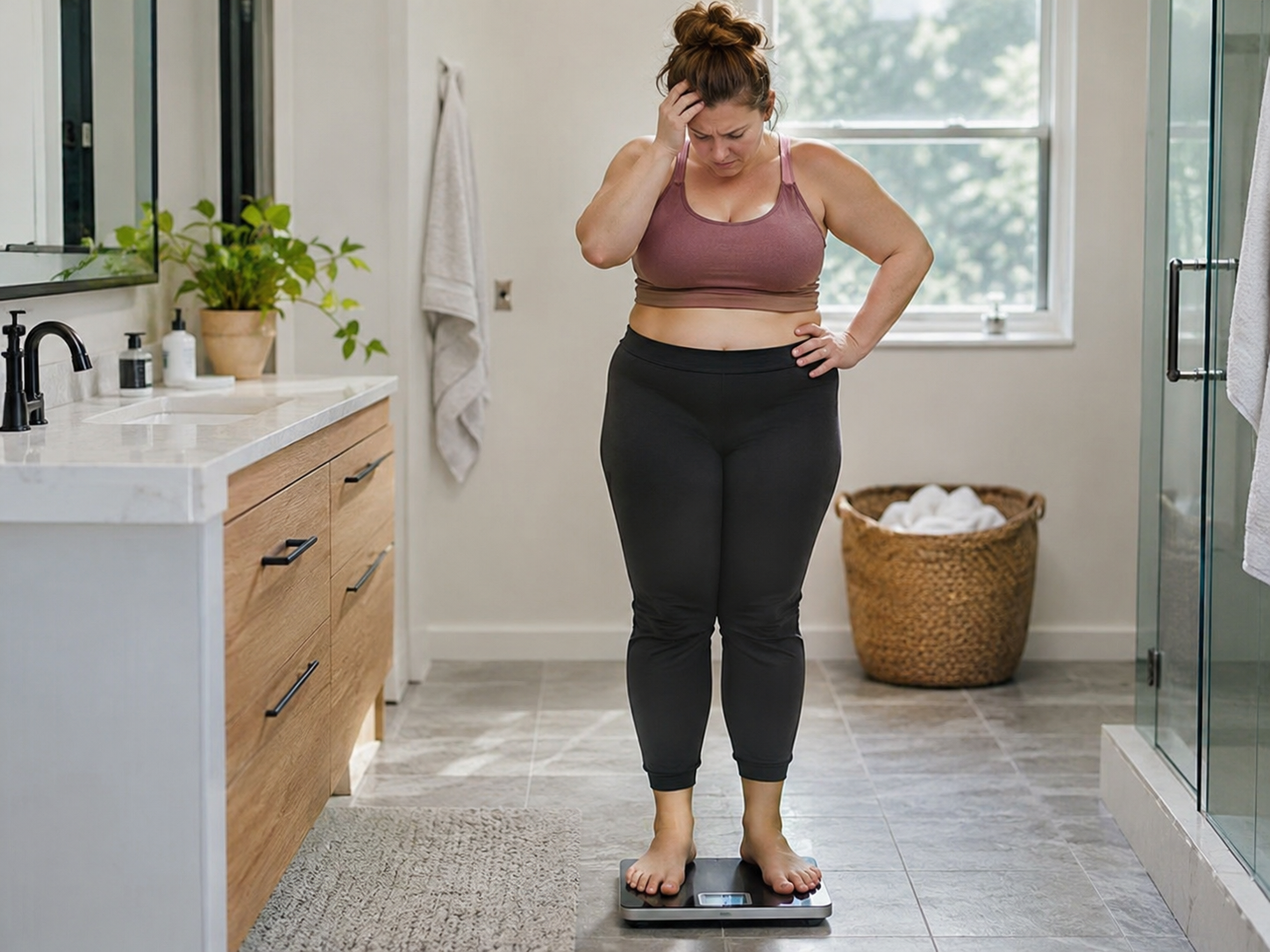
weight loss plateau

Why the Scale Stays Still: Common Causes

If you’re asking yourself, “Why does the scale stop moving when dieting?”, there’s usually more than one reason behind it.

Your Body Needs Less Energy Than Before

A weight loss plateau happen when after losing weight using an established pattern of diet and physical activity, there has been no further weight loss over a minimum time frame of at least 3 consecutive weeks. As long as you continue to follow the same established habits that previously led to weight loss, normal fluctuations in daily or weekly changes in body weight will be excluded from the definition of a plateau

Metabolic Adaptation and a Slow Metabolism

When you’re eating very few calories for an extended period of time, your body is going to try to conserve as much energy as possible. The hormones in your body that help regulate how hungry or full you are will begin to alter. Your body may send out more “I’m starving” signals and you might be moving slightly less than normal without realizing it (a few fewer steps each day, less fidgeting), which could cause you to feel like you have a slower metabolism than you ever did before.

Losing Muscle Along With Fat

Muscle burns more energy than fat, even at rest. If you lose weight without enough protein or strength training, part of what you lose is muscle, and that lowers the number of calories you burn each day.

Water Weight and Body Composition Changes

Early weight loss includes a lot of water. Later on, water shifts caused by salt, carbohydrates, hormones, or a hard workout can hide fat loss for days or even weeks. And if you’ve started strength training, you may be losing inches but not pounds.

Habits That Slowly Creep Back

Portions grow a little. Weekend snacks return. A few extra bites while cooking. None of it feels like much, but small changes add up and can close the calorie gap that was driving your results.

Underlying Metabolic Health Issues

Sometimes the reason you stopped losing weight is due to a medical problem. Issues such as insulin resistance, thyroid disorders, hormonal changes that happen in both perimenopausal and menopausal women, poor quality of sleep, ongoing stress, or taking certain prescription drugs can make it much more difficult for individuals to lose weight. The key thing here is that many people do not see these other health-related issues while they are focused on their diet and physical activity alone.

How Long Does a Weight Loss Plateau Last?

Plates are different for everyone. Sometimes you might see results in just a few weeks; sometimes it could be months of doing nothing but trying everything before you even consider changing anything. It all has to do with why you hit a wall. If you get bloated from water retention, that can go away in a couple of weeks. If you’re dealing with some form of metabolic adaptation (which is hard to treat) or if there is something wrong with your health, then you need to make big changes.

If your weight hasn’t changed in a month or more despite consistent effort, it’s time to take a closer look at what’s going on.

7 Strategies for Breaking a Weight Loss Plateau

  1. Recheck what you’re eating. Track your food honestly for one or two weeks. Many people discover that portions or “small extras” have crept back in.
  2. Prioritize protein. Protein helps protect muscle, keeps you full longer, and takes more energy to digest than carbs or fat.
  3. Cut back on refined carbs and added sugar. Fewer sugary drinks, sweets, and refined starches can help steady blood sugar and insulin levels, especially if insulin resistance is part of the picture.
  4. Add strength training. Lifting weights or doing body-weight exercises two to three times a week helps you keep and build muscle, which supports your metabolism.
  5. Move more throughout the day. Walking, taking the stairs, and standing more all add up. Here in Fort Collins, the Poudre River Trail and the foothills make it easy to get extra steps outdoors.
  6. Protect your sleep and manage stress. Poor sleep and chronic stress raise cortisol and increase hunger. Aim for seven to nine hours of sleep each night.
  7. Measure more than the scale. Track your waist, how your clothes fit, your energy, and progress photos. These often show results the scale misses.

weight loss plateau

Why Am I Not Losing Weight When I’m Doing Everything Right?

This is one of the most common questions we hear. If you’ve tightened up your eating, added exercise, improved your sleep, and still stopped losing weight, the problem may not be willpower. It may be your metabolic health.

Conditions like insulin resistance make it easier for your body to store fat and harder to burn it. Hormonal shifts can change where and how your body holds on to weight. In these cases, eating even less or exercising even longer often leads to frustration and burnout instead of results. What helps is finding and treating the root cause.

Get Help With a Weight Loss Plateau in Fort Collins

At Ideal Metabolic Health and Body, Dr. Jennifer McCabe Lentz, MD, and our team work with people across Fort Collins and Northern Colorado who feel stuck. Our medical weight loss program looks beyond calories to understand what’s actually happening in your body.

With medical weight loss in Fort Collins, you can expect:

  • A full evaluation of your metabolic health, including insulin resistance and hormone levels
  • A personalized nutrition plan built around your body, lifestyle, and goals
  • Medical support and treatment options when lifestyle changes alone aren’t enough
  • Regular check-ins to adjust your plan as your body changes

If you’ve been stuck on a plateau for weeks or months, you don’t have to figure it out alone.

Break Through Your Plateau

A weight loss plateau isn’t the end of your progress. It’s a signal that your body has changed, and your plan needs to change with it. With the right adjustments and the right support, the scale can start moving again.

If you’ve been stuck for a while and would like help with your weight loss plateau in Fort Collins, talking with a medical provider can be a helpful next step. Our team at Ideal Metabolic Health and Body is here whenever you’re ready.


sleep and blood sugar

Sleep and Blood Sugar: How One Bad Night Affects Your Glucose the Next Day

The relationship between sleep and blood sugar levels is much stronger than you think. Even with an excellent diet, regular physical activity and better-than-average overall health, inactivity or high glucose readings at the beginning of the day could be related to poor sleeping habits.

We see it every time; patients are frequently surprised by our first question regarding their sleep before asking them about their diet. One single night of low-quality sleep can affect how one’s body reacts to food for that same day. This article will explain why this occurs and what you can do about it.

Can Lack of Sleep Raise Blood Sugar?

Yes, and it doesn’t have to be a week or two of tiredness either. Even a single night of poor sleep can reduce sensitivity to insulin in otherwise normal, healthy adults. The end result is that your cells are less responsive to insulin; therefore, when you consume foods with glucose (sugars), that sugar remains in your blood for a longer period than if your cells were responding appropriately.

That’s why the connection between sleep and blood sugar matters so much for anyone working on their metabolic health. If you already have insulin resistance or prediabetes, a bad night can push numbers that are already borderline even higher.

sleep and blood sugar

What Happens Inside Your Body After a Bad Night

Loss of sleep sets off a chain reaction that affects several systems at once:

  1. Stress hormones rise. Cortisol and adrenaline stay elevated, signaling your liver to release extra glucose into the blood.
  2. Insulin works less efficiently. Your muscles and liver respond less to insulin’s signal, so the same meal can lead to a bigger glucose spike.
  3. Hunger hormones shift. Ghrelin, which drives appetite, tends to go up, while leptin, which helps you feel full, tends to go down.
  4. Cravings get louder. A tired brain looks for quick energy, which usually means sugary or highly processed foods.
  5. Energy drops. When you’re worn out, it’s harder to find the motivation to move, and movement is one of the best ways to bring glucose down.

Each of these effects is small on its own. Together, they explain why sleep and blood sugar are so closely tied.

Why You Might See High Blood Sugar After a Bad Night

If you use a glucose monitor or take your own blood glucose readings at home, you will probably see a higher fasting number the morning after poor sleep; also, if you eat breakfast, you are likely to have a greater increase in your blood glucose levels too. It is very typical to have high blood sugars after one of those nights of poor rest. The increased level of blood sugar is generally due to the hormonal response to the lack of rest rather than what you had eaten.

Timing matters too. Studies using continuous glucose monitors have found that going to bed late or keeping an irregular sleep schedule is linked to higher glucose after meals the following day. So it’s not only how long you sleep, but how consistently, and that’s an important piece of the sleep and blood sugar puzzle.

sleep and blood sugar

One Night vs. Ongoing Lack of Sleep

On the positive side, you have not ruined all of your progress with one bad night’s sleep. It is likely that your body will be able to recover as soon as you go back to your regular routine. A greater worry is that an occasional bad night could develop into a chronic issue. While it may seem like a small loss each night (a little less insulin sensitivity, a slightly increased appetite), these differences add up, and a long-term relationship between lack of sleep and high blood sugar levels can ultimately lead to weight gain, insulin resistance and an elevated risk for developing type 2 diabetes.

If you snore loudly, wake up gasping or feel exhausted even after a full night in bed, talk to a healthcare provider. Sleep apnea is common in people with insulin resistance and can quietly disrupt both sleep and blood sugar.

How to Protect Your Blood Sugar After a Bad Night

When it comes to sleep and blood sugar, you can’t always control how you sleep, but you can soften the effects the next day:

  1. Build a protein-forward breakfast. Eggs, Greek yogurt or a protein smoothie with some fiber will steady your glucose better than toast or cereal.
  2. Go easy on the extra coffee. A cup is fine, but piling on caffeine can push stress hormones even higher, and sugary coffee drinks add a quick glucose hit.
  3. Move after meals. A 10- to 15-minute walk helps your muscles absorb glucose. In Fort Collins, a loop around the block or a stroll along the Spring Creek Trail works perfectly.
  4. Plan your snacks. Keep nuts, cheese, cut vegetables or hard-boiled eggs nearby so cravings don’t send you to the vending machine.
  5. Keep naps short. A 20-minute nap can help, but long or late naps may make it harder to fall asleep that night.
  6. Get back on schedule. Go to bed at your usual time instead of staying up late to “catch up” on the day.

Small Sleep Habits That Make a Big Difference

  • Aim for 7–9 hours of sleep each night.
  • Wake up at the same time every day, even on weekends.
  • Get outside in the morning sun. Colorado’s sunny mornings make this easier than you might think.
  • Finish your last meal 2–3 hours before bed.
  • Keep your bedroom cool and dark.
  • Cut back on screens about an hour before bed.

Support for Your Metabolic Health in Fort Collins

We are here for you as well. If you notice the link between your sleep and blood sugar levels in your own records, or if you are working to eliminate insulin resistance, you do not have to work this through by yourself.

At Ideal Metabolic Health & Body, we provide a comprehensive approach to your metabolic health. When you’re ready for guidance, we’re here to help.

Weight Regain After GLP-1

How to Stop GLP-1 Without Gaining Weight: Handling Hunger and Avoiding Weight Regain

Weight regain is probably the most feared concern for everyone who is discontinuing their GLP-1 medications.
After weeks or months of gradual weight loss and an easier-to-control appetite, it may be disturbing when your appetite begins returning.

We hear this exact same question over and over at our Fort Collins Clinic: Will I put the weight back on once I stop my GLP-1?
The truth of the matter is that some degree of weight regain is likely (and very common) for many people; however, weight regain is not inevitable.

Why Hunger Comes Back After Stopping GLP-1 Medications

GLP-1 medications like semaglutide and tirzepatide mimic a natural gut hormone that tells your brain you’re full. They also slow digestion, so meals stay with you longer. While taking them, many people notice that the constant “food noise” fades into the background.
The effects of the medication on your system typically fade in a couple of weeks once it is out of your system. However, when your appetite returns, it may actually be stronger than before.

This is due to both biological factors and how your body responds to weight loss. After you have lost weight, your body sends stronger messages for hunger while sending weaker messages (or shutting off) for satiety to try to return to its pre-weight loss state. Therefore, weight gain after discontinuing GLP-1 has nothing to do with lack of willpower. Instead, it is simply your body working as it is designed.

Will I Gain the Weight Back After Stopping GLP-1?

Research on people who stopped using diet medications shows an overall loss of weight regained over the course of the first year. However, averages do not represent all aspects of your story. The people who keep the weight off tend to have one thing in common: they used their time on medication to build habits that last.

Think of GLP-1 medications as a window. They make it easier to change how you eat, move and sleep. If those changes stick, weight regain becomes much less likely.

Weight Regain After GLP-1

How to Avoid Weight Regain: Practical Steps That Work

If you’re wondering how to stop GLP-1 without gaining weight, these habits are the foundation of how to avoid weight regain. Ideally, start them before your last dose:

  1. Talk to your provider about tapering. Stopping all at once can make hunger hit harder, and many providers prefer to lower the dose gradually. Never adjust or stop your medication on your own.
  2. Make protein the anchor of every meal. Protein keeps you full longer and helps protect muscle. Eggs, Greek yogurt, chicken, fish and beans are easy places to start.
  3. Load up on fiber. Vegetables, berries, lentils and chia seeds add volume and slow digestion, a little like the medication did.
    Strength train two to three times a week. Muscle supports your metabolic health and helps your body burn more energy at rest.
  4. Keep regular meal times. Skipping meals often backfires later in the day, when hunger is hardest to manage.
  5. Protect your sleep. Short nights raise hunger hormones and cravings the next day.

Telling Real Hunger From Food Noise

Not every urge to eat means your body needs fuel. When cravings return, try a quick check-in:

  • Real hunger builds gradually, and almost any food sounds good.
  • Food noise shows up suddenly and usually wants something specific, like chips or sweets.
  • Emotional eating tends to follow stress, boredom or fatigue rather than an empty stomach.

When you’re feeling hungry for sure, then try to have a balanced meal or healthy snack. When it’s “food noise,” sometimes a drink of water, taking a quick walk, or distracting yourself for a couple of minutes will make it go away. Being able to know when this is happening is probably one of the best tools you have in fighting off weight regain.

Weight Regain After GLP-1

Keep an Eye on the Scale, Without Obsessing

Weighing yourself once or twice a week can help you catch weight regain early, when small adjustments are enough. Set a personal range, such as a few pounds above your current weight. If you drift past it, revisit your plan or check in with your care team.

Some people choose to stay on a lower maintenance dose or restart treatment later. That’s a decision to make with your provider, and it isn’t a failure. Obesity is a chronic condition, and it’s okay to treat it that way.

Support for Lasting Weight Loss in Fort Collins

When medical weight loss is only successful while medication is being taken, that’s as far as it goes. At Ideal Metabolic Health & Body in Fort Collins, CO, we create body-specific, routine-based plans for patients who need support transitioning from their GLP-1 medication to maintain long-term metabolic health.

If you’re feeling unsure about weight regain after your last dose, or you just want a clear picture of what comes next, we’re here to answer your questions and help you plan the road ahead.

best time to eat carbs

Carbs at Night vs. Morning: What’s the Best Time to Eat Carbs for Blood Sugar?

The best time to eat carbs. Most people run into a lot of conflicting advice finding out the right answer.

Here at our Clinic, we have seen this issue repeatedly, particularly with those who are working towards resolving their insulin resistance. In reality, whether or not your blood glucose levels will be affected by what time you consume carbohydrates depends in part upon how they are timed; however, timing is not the only factor.

Why Your Body Handles Carbs Differently Throughout the Day

Your body runs on an internal clock, and that clock affects how well you handle carbs. Earlier in the day, your muscles respond to insulin more readily, and your pancreas releases insulin more quickly after a meal. As the evening goes on, both of those slow down.

From a practical perspective, that exact same meal will have more of an impact on raising your blood sugar levels when consumed for dinner versus for breakfast. The increase will happen regardless of whether you are considered healthy or not. And this will tend to occur the closer it gets to bedtime when consuming carbohydrates.

Thus, based upon biology alone (with regard to which time of the day to consume carbohydrates), the answer leans toward earlier in the day.


best time to eat carbs

Is It Bad to Eat Carbs at Night If You Have Insulin Resistance?

“Bad” is a strong word, but eating carbs at night deserves more attention when you have insulin resistance.

The carbohydrates you consume will be less likely to be processed by the body when insulin levels are lower. Therefore, consuming a large amount of carbohydrate-rich foods (such as pasta) later in the day, such as at 8 pm, could result in an increased blood sugar response compared to consuming the same meal earlier in the day (i.e., at 12 pm).

According to studies, men with normal glucose regulation did not have significantly different results regardless of whether they consumed most of their carbohydrates at lunchtime or dinner, whereas men with elevated fasting glucose or impaired glucose tolerance exhibited poorer glucose markers when they consumed most of their carbohydrates at dinner.

Evening carbs can also show up the next morning. If your fasting glucose levels are higher when you wake up than they were at bedtime, a carb-heavy dinner or late snack may be part of the reason.

Why You Get a Glucose Spike After Dinner

When it comes to eating late at night and blood sugar, a few factors tend to stack up:

  • Lower insulin sensitivity. Your body’s evening rhythm makes glucose handling less efficient.
  • Less movement. Most of us head to the couch after dinner, so our muscles aren’t pulling much glucose out of the blood.
  • Bigger portions. For many people, dinner is the largest and most carb-heavy meal of the day.
  • Rising melatonin. Some research suggests the sleep hormone melatonin may dampen insulin release, which could be one more reason late meals spike higher.

Together, they explain why a glucose spike after dinner is so common, and why the best time to eat carbs usually isn’t right before bed.

best time to eat carbs

Meal Timing for Insulin Resistance: Simple Changes That Help

For most people with insulin resistance, the best time to eat carbs is at breakfast or lunch rather than late in the evening. That doesn’t mean cutting carbs out of dinner completely. Try these practical steps:

  1. Move your biggest carb portion earlier. Have your rice, potatoes or bread at lunch, and keep dinner focused on protein and vegetables.
  2. Eat dinner a little earlier. Finishing two to three hours before bed gives your body time to process the meal.
  3. Eat your carbs last. Starting with vegetables and protein, then finishing with starches, can noticeably soften the spike.
  4. Take a short walk. Even 10 to 15 minutes after dinner helps your muscles use glucose. A loop around your neighborhood or a stretch of the Spring Creek Trail counts.
  5. Choose slower carbs. Beans, lentils, whole fruit and intact grains raise blood sugar more gently than white bread or sweets.
  6. Rethink the after-dinner snack. If you’re truly hungry, pair a small portion of carbs with some protein or healthy fat.

One important note: if you take insulin or medications that can cause low blood sugar, talk with your provider before changing your eating schedule.

Timing Matters, but It’s Not the Whole Story

The best time to eat carbs may be a small part of the overall equation; other factors, including total carbohydrate intake, quality of carbohydrate foods, sleep, stress levels and level of physical activity, will typically have much greater influence on your metabolic health than the time at which you consume carbohydrates.

Therefore, each individual has their own best time for consuming carbohydrates. This can be determined by using a continuous glucose monitoring system (CGMS) or simply checking blood sugar levels with a finger prick prior to eating and again two hours postprandially.

Get Personalized Support in Fort Collins

At Ideal Metabolic Health & Body, we assist individuals from Fort Collins to Northern Colorado in developing personalized eating plans based on how they are designed physically and in terms of routine. If you live with insulin resistance, prediabetes, or resistant blood sugar numbers, you will no longer need to try to determine when the best time to eat carbs is on your own.

If you’d like support understanding your glucose levels and finding a meal timing approach that works for you, we’re here to help.

Skip to content