
sleep and blood sugar

Sleep and Blood Sugar: How One Bad Night Affects Your Glucose the Next Day

The relationship between sleep and blood sugar levels is much stronger than you think. Even with an excellent diet, regular physical activity and better-than-average overall health, inactivity or high glucose readings at the beginning of the day could be related to poor sleeping habits.

We see it every time; patients are frequently surprised by our first question regarding their sleep before asking them about their diet. One single night of low-quality sleep can affect how one’s body reacts to food for that same day. This article will explain why this occurs and what you can do about it.

Can Lack of Sleep Raise Blood Sugar?

Yes, and it doesn’t have to be a week or two of tiredness either. Even a single night of poor sleep can reduce sensitivity to insulin in otherwise normal, healthy adults. The end result is that your cells are less responsive to insulin; therefore, when you consume foods with glucose (sugars), that sugar remains in your blood for a longer period than if your cells were responding appropriately.

That’s why the connection between sleep and blood sugar matters so much for anyone working on their metabolic health. If you already have insulin resistance or prediabetes, a bad night can push numbers that are already borderline even higher.

sleep and blood sugar

What Happens Inside Your Body After a Bad Night

Loss of sleep sets off a chain reaction that affects several systems at once:

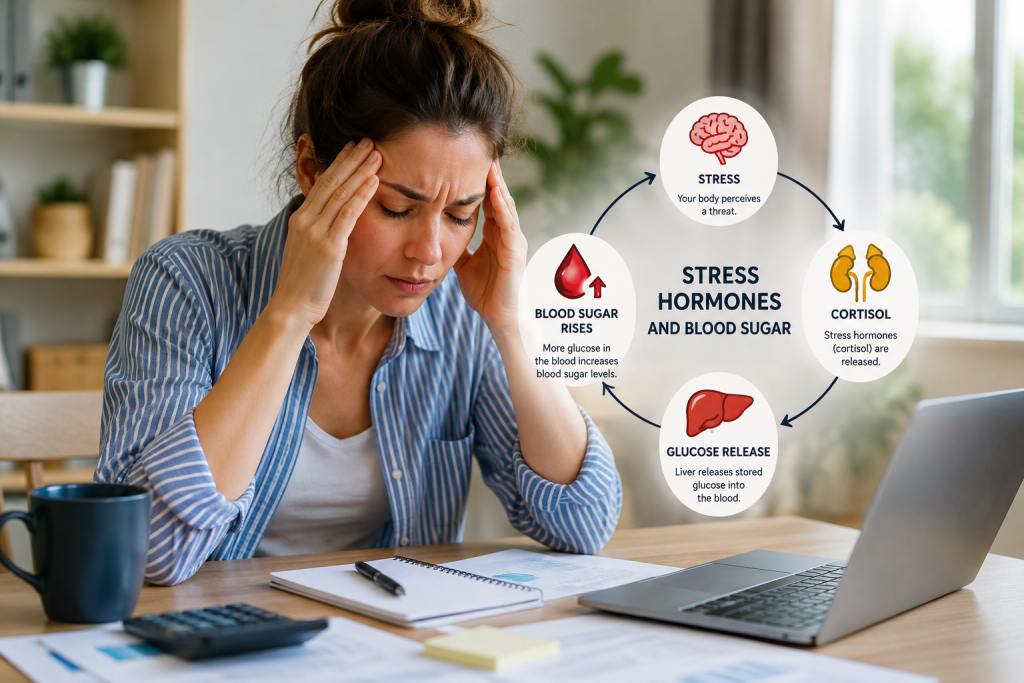
  1. Stress hormones rise. Cortisol and adrenaline stay elevated, signaling your liver to release extra glucose into the blood.
  2. Insulin works less efficiently. Your muscles and liver respond less to insulin’s signal, so the same meal can lead to a bigger glucose spike.
  3. Hunger hormones shift. Ghrelin, which drives appetite, tends to go up, while leptin, which helps you feel full, tends to go down.
  4. Cravings get louder. A tired brain looks for quick energy, which usually means sugary or highly processed foods.
  5. Energy drops. When you’re worn out, it’s harder to find the motivation to move, and movement is one of the best ways to bring glucose down.

Each of these effects is small on its own. Together, they explain why sleep and blood sugar are so closely tied.

Why You Might See High Blood Sugar After a Bad Night

If you use a glucose monitor or take your own blood glucose readings at home, you will probably see a higher fasting number the morning after poor sleep; also, if you eat breakfast, you are likely to have a greater increase in your blood glucose levels too. It is very typical to have high blood sugars after one of those nights of poor rest. The increased level of blood sugar is generally due to the hormonal response to the lack of rest rather than what you had eaten.

Timing matters too. Studies using continuous glucose monitors have found that going to bed late or keeping an irregular sleep schedule is linked to higher glucose after meals the following day. So it’s not only how long you sleep, but how consistently, and that’s an important piece of the sleep and blood sugar puzzle.

sleep and blood sugar

One Night vs. Ongoing Lack of Sleep

On the positive side, you have not ruined all of your progress with one bad night’s sleep. It is likely that your body will be able to recover as soon as you go back to your regular routine. A greater worry is that an occasional bad night could develop into a chronic issue. While it may seem like a small loss each night (a little less insulin sensitivity, a slightly increased appetite), these differences add up, and a long-term relationship between lack of sleep and high blood sugar levels can ultimately lead to weight gain, insulin resistance and an elevated risk for developing type 2 diabetes.

If you snore loudly, wake up gasping or feel exhausted even after a full night in bed, talk to a healthcare provider. Sleep apnea is common in people with insulin resistance and can quietly disrupt both sleep and blood sugar.

How to Protect Your Blood Sugar After a Bad Night

When it comes to sleep and blood sugar, you can’t always control how you sleep, but you can soften the effects the next day:

  1. Build a protein-forward breakfast. Eggs, Greek yogurt or a protein smoothie with some fiber will steady your glucose better than toast or cereal.
  2. Go easy on the extra coffee. A cup is fine, but piling on caffeine can push stress hormones even higher, and sugary coffee drinks add a quick glucose hit.
  3. Move after meals. A 10- to 15-minute walk helps your muscles absorb glucose. In Fort Collins, a loop around the block or a stroll along the Spring Creek Trail works perfectly.
  4. Plan your snacks. Keep nuts, cheese, cut vegetables or hard-boiled eggs nearby so cravings don’t send you to the vending machine.
  5. Keep naps short. A 20-minute nap can help, but long or late naps may make it harder to fall asleep that night.
  6. Get back on schedule. Go to bed at your usual time instead of staying up late to “catch up” on the day.

Small Sleep Habits That Make a Big Difference

  • Aim for 7–9 hours of sleep each night.
  • Wake up at the same time every day, even on weekends.
  • Get outside in the morning sun. Colorado’s sunny mornings make this easier than you might think.
  • Finish your last meal 2–3 hours before bed.
  • Keep your bedroom cool and dark.
  • Cut back on screens about an hour before bed.

Support for Your Metabolic Health in Fort Collins

We are here for you as well. If you notice the link between your sleep and blood sugar levels in your own records, or if you are working to eliminate insulin resistance, you do not have to work this through by yourself.

At Ideal Metabolic Health & Body, we provide a comprehensive approach to your metabolic health. When you’re ready for guidance, we’re here to help.


best time to eat carbs

Carbs at Night vs. Morning: What’s the Best Time to Eat Carbs for Blood Sugar?

The best time to eat carbs. Most people run into a lot of conflicting advice finding out the right answer.

Here at our Clinic, we have seen this issue repeatedly, particularly with those who are working towards resolving their insulin resistance. In reality, whether or not your blood glucose levels will be affected by what time you consume carbohydrates depends in part upon how they are timed; however, timing is not the only factor.

Why Your Body Handles Carbs Differently Throughout the Day

Your body runs on an internal clock, and that clock affects how well you handle carbs. Earlier in the day, your muscles respond to insulin more readily, and your pancreas releases insulin more quickly after a meal. As the evening goes on, both of those slow down.

From a practical perspective, that exact same meal will have more of an impact on raising your blood sugar levels when consumed for dinner versus for breakfast. The increase will happen regardless of whether you are considered healthy or not. And this will tend to occur the closer it gets to bedtime when consuming carbohydrates.

Thus, based upon biology alone (with regard to which time of the day to consume carbohydrates), the answer leans toward earlier in the day.


best time to eat carbs

Is It Bad to Eat Carbs at Night If You Have Insulin Resistance?

“Bad” is a strong word, but eating carbs at night deserves more attention when you have insulin resistance.

The carbohydrates you consume will be less likely to be processed by the body when insulin levels are lower. Therefore, consuming a large amount of carbohydrate-rich foods (such as pasta) later in the day, such as at 8 pm, could result in an increased blood sugar response compared to consuming the same meal earlier in the day (i.e., at 12 pm).

According to studies, men with normal glucose regulation did not have significantly different results regardless of whether they consumed most of their carbohydrates at lunchtime or dinner, whereas men with elevated fasting glucose or impaired glucose tolerance exhibited poorer glucose markers when they consumed most of their carbohydrates at dinner.

Evening carbs can also show up the next morning. If your fasting glucose levels are higher when you wake up than they were at bedtime, a carb-heavy dinner or late snack may be part of the reason.

Why You Get a Glucose Spike After Dinner

When it comes to eating late at night and blood sugar, a few factors tend to stack up:

  • Lower insulin sensitivity. Your body’s evening rhythm makes glucose handling less efficient.
  • Less movement. Most of us head to the couch after dinner, so our muscles aren’t pulling much glucose out of the blood.
  • Bigger portions. For many people, dinner is the largest and most carb-heavy meal of the day.
  • Rising melatonin. Some research suggests the sleep hormone melatonin may dampen insulin release, which could be one more reason late meals spike higher.

Together, they explain why a glucose spike after dinner is so common, and why the best time to eat carbs usually isn’t right before bed.

best time to eat carbs

Meal Timing for Insulin Resistance: Simple Changes That Help

For most people with insulin resistance, the best time to eat carbs is at breakfast or lunch rather than late in the evening. That doesn’t mean cutting carbs out of dinner completely. Try these practical steps:

  1. Move your biggest carb portion earlier. Have your rice, potatoes or bread at lunch, and keep dinner focused on protein and vegetables.
  2. Eat dinner a little earlier. Finishing two to three hours before bed gives your body time to process the meal.
  3. Eat your carbs last. Starting with vegetables and protein, then finishing with starches, can noticeably soften the spike.
  4. Take a short walk. Even 10 to 15 minutes after dinner helps your muscles use glucose. A loop around your neighborhood or a stretch of the Spring Creek Trail counts.
  5. Choose slower carbs. Beans, lentils, whole fruit and intact grains raise blood sugar more gently than white bread or sweets.
  6. Rethink the after-dinner snack. If you’re truly hungry, pair a small portion of carbs with some protein or healthy fat.

One important note: if you take insulin or medications that can cause low blood sugar, talk with your provider before changing your eating schedule.

Timing Matters, but It’s Not the Whole Story

The best time to eat carbs may be a small part of the overall equation; other factors, including total carbohydrate intake, quality of carbohydrate foods, sleep, stress levels and level of physical activity, will typically have much greater influence on your metabolic health than the time at which you consume carbohydrates.

Therefore, each individual has their own best time for consuming carbohydrates. This can be determined by using a continuous glucose monitoring system (CGMS) or simply checking blood sugar levels with a finger prick prior to eating and again two hours postprandially.

Get Personalized Support in Fort Collins

At Ideal Metabolic Health & Body, we assist individuals from Fort Collins to Northern Colorado in developing personalized eating plans based on how they are designed physically and in terms of routine. If you live with insulin resistance, prediabetes, or resistant blood sugar numbers, you will no longer need to try to determine when the best time to eat carbs is on your own.

If you’d like support understanding your glucose levels and finding a meal timing approach that works for you, we’re here to help.

food noise

Food Noise: Stay Consistent Without Restriction

Have you ever finished a satisfying meal only to find yourself thinking about food again 30 minutes later? Or maybe you’re constantly planning your next snack, even when you’re not physically hungry. If that sounds familiar, you may be experiencing food noise.

Many people attempting to lose weight find food noise as one of their biggest barriers to consistent behavior. Food noise can be an overwhelming force behind making healthy eating decisions become an exhausting routine for you and also lead you to ask yourself how you possibly have no control over your appetite. Fortunately, you do not face this challenge alone and you have a number of effective ways to deal with food noise without having to sacrifice choice.

Let’s take a closer look at what is food noise, why it happens, and how you can build habits that support both your health and your long-term goals.

What Is Food Noise?

Put simply, food noise is constant/repetitive food thoughts not driven by true physical need for food. In other words, you eat from habit or boredom, in response to stress/emotions, or from an external cue related to food.

Understanding what is food noise is important because it helps explain why sticking to a weight loss plan can sometimes feel much harder than expected.

Unlike normal hunger, food noise often continues even after you’ve eaten enough. It can make you feel like you’re constantly negotiating with yourself about what, when, or how much to eat.

food noise

Food Noise vs. Physical Hunger

One of the easiest ways to recognize food noise is by comparing it with true physical hunger.

Physical hunger usually:

  • Develops gradually
  • Can be satisfied with a variety of foods
  • Goes away after eating enough
  • Is your body’s natural signal that it needs energy

Food noise, on the other hand, often:

  • Appears suddenly
  • Focuses on specific foods
  • Continues after a meal
  • Feels more mental than physical

Learning this difference is one of the first steps toward building a healthier relationship with food.

Why Does Food Noise Happen?

There isn’t one single cause of food noise. Instead, it’s often influenced by several factors working together.

Stress and Eating

One of the biggest contributors is stress and eating.

When you are in a stressful situation, your body will release chemicals that may stimulate your desire for food. These chemicals may also lead to an increased desire for high-calorie items. It is because of this hormone response that many people report experiencing stronger desires for certain types of food when they have long days at work, during emotional events, or while sleeping poorly.

Stress eating can develop as a pattern over time. As such, instead of having a physiological response to hunger signals, you begin to use food as a way to provide yourself with comfort and/or relief.

Emotional Eating

Emotional eating is another common factor.

Food is often used as an emotional coping mechanism in response to feelings of sadness, anxiety, loneliness, and/or frustration. Though consuming food may give us immediate relief from those negative feelings, it does nothing to alleviate the source of the issue; therefore, we find ourselves back at “food noise” soon after.

That being said, this isn’t failure; rather, your brain has merely adopted an alternative to using these other forms of expression. As explained by Mayo Clinic’s guide on weight loss and emotional eating, recognizing emotional triggers is an important step toward developing healthier eating habits.

How Food Noise Affects Weight Loss

Many people assume weight loss is only about willpower. In reality, constant food noise can make even the strongest motivation difficult to maintain.

When you’re thinking about food throughout the day, it becomes harder to:

  • Follow your weight loss program
  • Recognize true hunger
  • Make balanced food choices
  • Enjoy meals without guilt
  • Feel satisfied after eating

This is why successful weight loss often involves more than counting calories. Understanding the thoughts and habits surrounding food is just as important.

food noise and healthy weight loss

How to Reduce Food Noise

If you’re wondering how to reduce food noise, the goal isn’t to ignore your hunger or eliminate thoughts about food completely. Instead, it’s about creating habits that help your mind and body work together.

Here are several strategies that can help.

Eat Balanced Meals

Meals that include lean protein, fiber-rich vegetables, healthy fats, and complex carbohydrates tend to keep you fuller for longer.

Balanced nutrition can help stabilize appetite and reduce the intensity of food noise throughout the day.

Practice Mindful Eating

Mindful eating will help you develop an awareness of your physical body’s signals (both your hunger and fullness) by slowing down while you eat.

Some very simple ways to practice mindful eating are:

  • To avoid distracting yourself from the process of eating
  • To chew each bite slowly
  • To check if you’re truly hungry before deciding on a snack
  • To enjoy each meal rather than hurrying

Many people discover that mindful eating helps them better distinguish between true hunger and mental cravings.

Manage Stress

Because stress and eating are closely connected, finding healthy ways to manage stress can also reduce food noise.

Activities such as walking, deep breathing, journaling, yoga, or spending time outdoors can help calm both the mind and body.

Get Enough Sleep

Poor sleep can increase appetite and make food noise feel louder the next day. Prioritizing consistent sleep supports healthier appetite regulation and overall metabolic health.

Follow a Personalized Plan

Every person’s metabolism, appetite, and lifestyle are different. A personalized weight loss plan can help you identify patterns that contribute to food noise while creating strategies that feel realistic for everyday life.

Finding Balance in Fort Collins

When you are attempting to lose weight in Fort Collins, don’t be looking for a perfect diet — it is simply about developing healthy food-related habits that work for you.

Rather than categorizing foods as good or bad, develop an awareness of how your body communicates its needs and be willing to respond with flexibility. Small, frequent changes (i.e., taking walks in the trails surrounding Fort Collins; cooking meals at home using all three components of a balanced meal; practicing mindfulness while eating) can eventually produce significant results.

The journey looks different for everyone, and that’s okay.

Small Changes Can Quiet Food Noise

Learning how to reduce food noise isn’t about eliminating cravings forever. It’s about understanding why they happen and creating routines that help you feel more in control.

As you become more aware of your hunger cues, emotional triggers, and daily habits, making healthy choices can begin to feel more natural instead of restrictive.

Ideal Metabolic Health & Body in Fort Collins understands that losing weight successfully will require more than just cutting back on calories. We are here to provide you with sustainable ways to manage your appetite for healthy weight loss while creating an individualized plan that meets your needs. Using this long-term habit-focused approach as opposed to short-term restrictive diets, you can become confident in achieving improved metabolic health one small step at a time.

stress hormones and blood sugar

How Stress Hormones Raise Blood Sugar

Your food intake is good for your health, you are getting regular physical activity, and you are making better choices for your overall health. However, you are finding it difficult to get your blood sugar under control as well as you would like. The possible issue here could be what many of us tend to ignore when we talk about our health: stress.

Stress hormones and blood sugar are often overlooked. Stressors include, but are not limited to work pressures, lack of sleep, being overwhelmed with family obligations, etc., all of which cause stress and put pressure on the body.

Understanding how stress hormones and blood sugar interact can help you make sense of frustrating blood sugar fluctuations—even when you’re doing everything “right.”

stress hormones and blood sugar

What Are Stress Hormones?

When your body experiences stress, it releases several hormones designed to help you respond quickly to a challenge. The best-known of these is cortisol, often called the “stress hormone.”

Cortisol also performs several vital functions, which include regulating energy in your body, supporting your immune system and influencing your sleep/wake cycles and also helps support a cortisol hormone levels in your body on an ongoing basis. During short periods of stress, cortisol can be helpful by preparing your body to react to the stressor.

This is where the connection between stress hormones and blood sugar becomes especially important.

Does Cortisol Increase Blood Sugar?

The short answer is yes.

Cortisol raises blood glucose levels and gets your body ready to respond to stress by telling your liver to let go of stored glucose in the form of blood sugar. The increased blood glucose supplies both your muscle cells with fuel and your brain with energy.

In short bursts, this response is completely normal.

However, when stress hormones and blood sugar remain linked through ongoing stress, your body may continue releasing glucose even when you don’t actually need the extra energy.

Over time, this can contribute to higher blood sugar, greater insulin demand, and increased difficulty maintaining good metabolic health.

In fact, according to the National Institute of Diabetes and Digestive and Kidney Diseases (NIDDK), conditions that cause the body to produce too much cortisol can contribute to insulin resistance and increase the risk of developing diabetes.

Why Blood Sugar Can Rise Even When You Eat Healthy

The idea that our food intake alone affects our glucose levels in this way seems to be one of those myths.

The truth of the matter is that stress hormones and blood sugar are linked, and it doesn’t really matter if you have eaten recently.

Think about waking up late for a meeting with several tasks on your plate, then having to commute home while thinking about your family’s needs. Even though each meal was perfectly balanced, your body might see all of this as a continuous threat.

As a result:

  • Cortisol levels stay elevated.
  • More glucose enters the bloodstream.
  • Your body may become less responsive to insulin over time.
  • Blood sugar becomes harder to regulate.
  • This helps explain why someone following a healthy eating plan may still experience unexpected glucose fluctuations.

Can Low Cortisol Affect Blood Sugar?

Most discussions focus on when cortisol is high, but it’s also worth mentioning that cortisol is low in some medical conditions.

Low cortisol is far less prevalent than high cortisol and since it impairs glucose synthesis through insulin stimulation, it may also disrupt blood sugar homeostasis. For that reason, all persistent symptomology should be evaluated by a medical professional as opposed to being automatically attributed to “stress”.

However, for most people, chronically elevated levels of cortisol will represent the more typical cause of their symptoms.

Signs Your Stress May Be Affecting Blood Sugar

When stress hormones and blood sugar remain elevated for long periods, you might notice symptoms such as:

  • Increased cravings for sugary foods
  • Afternoon energy crashes
  • Difficulty concentrating
  • Trouble sleeping
  • Feeling hungry soon after eating
  • Weight gain around the abdomen
  • Higher-than-expected glucose readings

These symptoms don’t automatically mean you have a medical condition, but they can be clues that your body is under more stress than it can comfortably manage.

Supporting Healthy Stress Hormones and Blood Sugar in Fort Collins

The good news is that you don’t have to eliminate stress completely to support your metabolism. Instead, the goal is helping your body recover more effectively between stressful moments.

Simple habits that may help support healthier stress hormones and blood sugar include:

  • Prioritizing consistent, quality sleep
  • Walking after meals
  • Eating balanced meals that include protein, fiber, and healthy fats
  • Practicing deep breathing or mindfulness
  • Strength training several times each week
  • Spending time outdoors, whether that’s walking a local trail or simply getting fresh air

These small changes can help support healthier cortisol levels, improve how your body manages glucose, and promote better overall metabolic health.

Small Lifestyle Changes Can Make a Big Difference

Because stress hormones and blood sugar are so closely connected, improving one often benefits the other. Managing stress doesn’t just support emotional well-being—it can also help your body regulate blood sugar more effectively and reduce unnecessary glucose spikes.

Remember that your health is influenced by much more than what appears on your plate. Sleep, movement, recovery, and emotional wellness all play important roles in maintaining healthy metabolism.

When it comes to finding the right path for true health, our belief is that knowing your body as a complete system is essential to true health. With this in mind, at Ideal Metabolic Health and Body in Fort Collins, our staff are here to assist you in learning what causes fluctuations in your blood glucose levels through stress hormone changes; identifying the variables affecting your metabolic health; and developing good, healthy habits which will lead to long-term well-being.

Whether you have begun your process or if you need additional knowledge of the signs your body gives you, we’re to support you every step of the way in Fort Collins.

gut health and blood sugar

How Gut Health Affects Blood Sugar and Metabolic Health

Most people have two completely different thoughts when it comes to their gut health and blood sugar. Digestion tends to be thought about in terms of bloating, bowel habits, and food sensitivities. Blood sugar is typically talked about in terms of diabetes, energy, and weight.

However, both digestion and blood sugar are actually connected in many ways. The moment you take a bite of a meal, there will begin a cascade of digestive and hormonal responses that determine how quickly your body can put glucose into circulation, how much insulin is produced by the body in response to this increase, and how stable your energy will feel over time.

Understanding this connection can make gut health feel less mysterious and blood sugar management more practical.

How Digestion Affects Blood Sugar

When you take in carbohydrates, your body breaks most of these carbs down to a simple sugar called glucose. Glucose travels into the bloodstream via absorption in the small intestine. Once in the bloodstream, it is available for use as an energy source.

Your pancreas secretes insulin in response to this increase in glucose, which aids in moving glucose out of the bloodstream and into muscle, liver, etc. If glucose enters the bloodstream quickly, the body may need a larger insulin response. When it enters more gradually, glucose levels often rise more steadily.

This is why two meals containing similar amounts of carbohydrates can affect blood sugar differently. A food’s structure, fiber content, processing, preparation method, portion size, and the other foods eaten with it can all influence gut health and glucose absorption.

gut health and blood sugar

Why Some Foods Raise Glucose Levels Faster

Highly processed carbs tend to be broken down more quickly by the body’s digestive process. As such, sugary drinks, cakes, candies and other refined grains are likely to lead to a much more rapid increase in your blood glucose levels compared with unprocessed food.

The same is true of many different types of whole foods. Carbs found in beans, lentils, veggies, whole grain breads/cereals, etc (carbs high in fiber) take longer to break down as they are composed of many different layers or structures which need to be broken down before absorption into the bloodstream can occur.

Protein and fat can also slow the digestion of a mixed meal. For example, eating an apple with a handful of nuts may affect glucose levels differently than drinking apple juice. Juice contains carbohydrates but has less intact fiber and requires very little digestion before its sugars are absorbed.

The goal is not necessarily to eliminate carbohydrates. It is to choose balanced meals that provide nutrients and encourage a steadier release of energy.

The Role of Fiber in Gut Health and Blood Sugar

Soluble fiber is digested by the body, but only to a limited extent since it contains many carbohydrates that are unabsorbed. When soluble fiber is exposed to liquid, it absorbs it and becomes a gel that slows down the absorption of glucose as well as the rate at which food moves through the digestive system.

Soluble fiber supplies nutrients to bacteria present in the large intestine (colon), which feed on certain types of fiber. The bacteria break down some of this fiber into short-chain fatty acids.

Researchers are studying how these substances may relate to inflammation, appetite signals, insulin sensitivity, and metabolic health. However, scientists have not identified one “perfect” microbiome or a single probiotic that reliably improves blood sugar for everyone.

Eating a varied diet containing many different plant foods is generally a more practical starting point than depending on one supplement.

gut health and metabolism

Can Gut Health Affect Insulin Resistance?

Gut health and insulin resistance appear to be connected, but the relationship is complicated.

Research studies have demonstrated connections between certain gut microbiomes and chronic diseases, including obesity, insulin resistance, and type 2 diabetes. The mere connection doesn’t imply that there is a direct causal effect from a specific type of bacteria on elevated glucose levels.

In other words, diet, medication, sleep, stress, exercise, genetics, and body mass index (BMI) are all factors which impact our glucose regulation in addition to influencing the types of microbes present in our intestines. Therefore, isolating the individual effects of the intestinal bacteria is very challenging.

For everyday purposes, it is more helpful to focus on habits that support both systems. Nutritious meals, regular movement, adequate sleep, and stress management can benefit gut health and metabolism at the same time.

Blood Sugar Can Affect Digestion Too

The connection is also reversible. Long-term hyperglycemia can affect the entire gastrointestinal tract, including nerves that are associated with GI function. In certain people who have had diabetes for many years, peripheral neuropathy can lead to gastroparesis, which leads to delayed gastric emptying of food from the stomach into the small intestine.

Delayed emptying can produce symptoms such as nausea, early satiety, bloating and/or unpredictable glycemic excursions due to irregular arrival of nutrients into the small intestine.

Occasional digestive discomfort does not automatically mean someone has gastroparesis. Persistent vomiting, unexplained weight loss, severe abdominal discomfort, difficulty eating, or major changes in glucose levels should be evaluated by a healthcare professional.

How to Improve Gut Health Through Your Diet

A diet to help digestion doesn’t have to be a restrictive cleanse with many supplements. A good way to begin could be to gradually introduce more variety in your daily food intake.

You can start by adding vegetables, beans, lentils, berries, whole grain products (as tolerated), nuts and seeds. If you wish, you may also consider fermented foods like plain yogurt, kefir, kimchi, or sauerkraut for added variety; however, they are not necessary. Increasing fiber too quickly can cause gas or bloating, so make changes gradually and drink enough water. Pairing carbohydrates with protein, fiber, or healthy fats may also help create a steadier post-meal glucose response.

Movement can help as well. A brief walk after eating allows working muscles to use glucose. In Fort Collins, that could mean walking through your neighborhood or visiting a local trail or park when the weather allows.

All of these approaches should be followed under the guidance of a qualified healthcare professional.

Digestion Is Part of the Metabolic Health Picture

Gut health is about more than avoiding digestive symptoms. The way food is broken down, absorbed, and processed helps influence blood sugar, appetite, energy, and overall metabolic health. At the same time, glucose regulation can affect digestive function. If digestive symptoms or changing blood sugar patterns are making it difficult to understand what works for your body, Ideal Metabolic Health and Body in Fort Collins can help you explore those patterns and develop a personalized, realistic approach to nutrition and metabolic wellness.

1 2 3 … 6
Skip to content